Dear Honourable
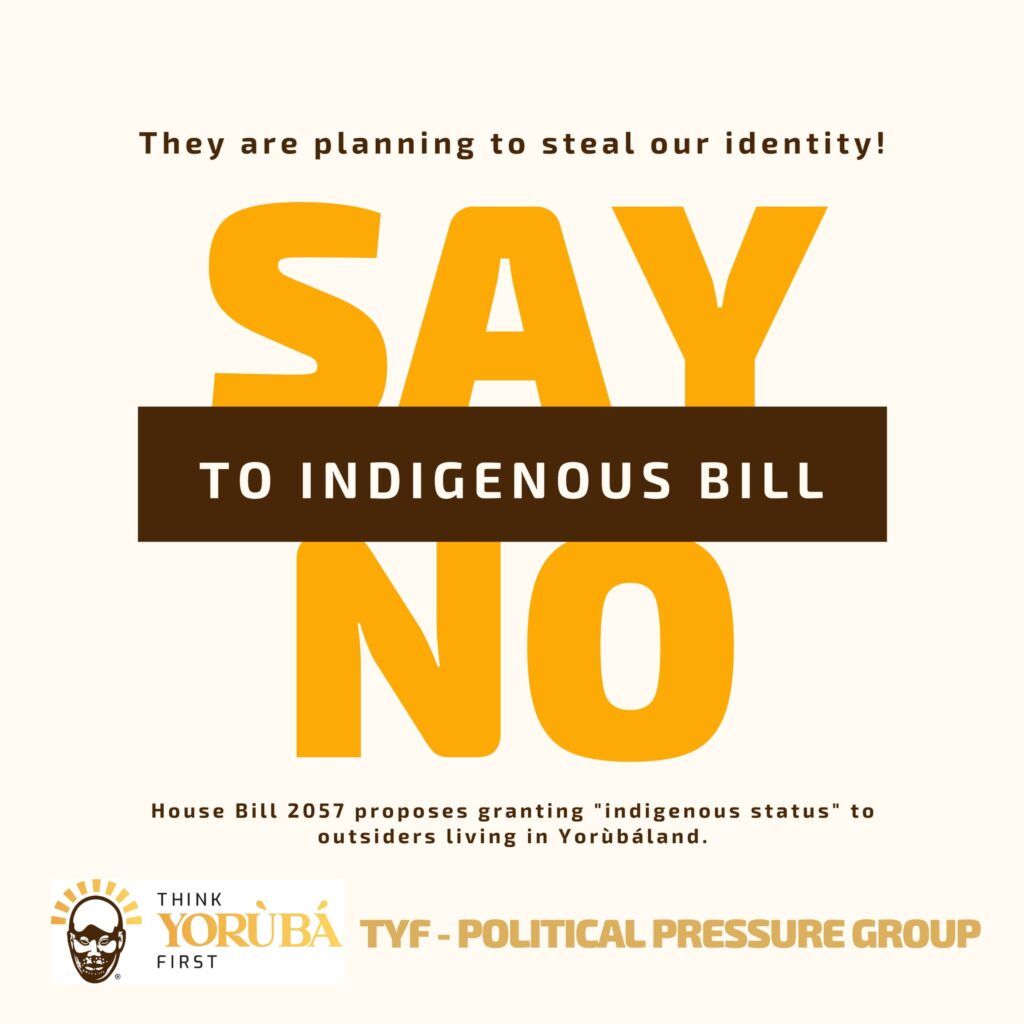
I %honorific% %first_name% %last_name% a member of the constituency mentioned below. I am writing to express my deep concern on the proposed Federal Bill by Hon. Kalu Okezie, which seeks to grant indigenous rights to Nigerians who have either lived in a particular place for ten years or have been married to an indigenous person for the same period HB 2057. This bill, if passed into law, will not only erode the cultural and historical foundations of indigenous peoples across Nigeria but will also be a dangerous catalyst for ethnic tensions, conflicts, and long-term instability.
Global Precedents Against Such Provisions
No serious nation undermines the rights of its indigenous people by arbitrarily granting indigenous status to settlers. Around the world, indigenous identity is tied to ancestry, cultural heritage, and historical connection to the land not just residency or marriage. Consider the following examples:
United States & Native Americans – Indigenous status among Native American tribes is based on strict bloodline and ancestral ties, not residency.
Australia & Aboriginals – The Aboriginal peoples of Australia have specific rights tied to ancestry and cultural heritage, and non-indigenous Australians, even after centuries, do not acquire those rights simply by residency or marriage
Canada & First Nations – Canada recognises the unique rights of its First Nations people based on lineage and history, not based on settlement or intermarriage.
New Zealand & Māori – The Māori people maintain exclusive indigenous status despite other racial groups living in New Zealand for centuries.
Historical and Contemporary Dangers of Ethnic Displacement
History has shown that forceful alteration of indigenous identity is a precursor to ethnic violence and civil unrest, especially in multi-ethnic and multi-cultural nations. Consider these cases:
Rwanda (1994 Genocide) – The manipulation of ethnic identity led to mass violence between the Hutu and Tutsi populations, with devastating consequences.
South Sudan Conflict – Decades of imposed ethnic integrations contributed to tensions that eventually led to South Sudan’s secession.
Nigeria itself has witnessed countless ethnic conflicts due to territorial and indigenous disputes. The crises in Jos, Southern Kaduna, Ife-Modakeke, Aguleri- Umuleri, and the clashes between herders and farmers across the Middle Belt all stem from contestations over land and identity. Legalising the erasure of indigenous identity will exacerbate these conflicts, not resolve them.
Conclusion and Call to Action.
The indigenous identity of Nigeria’s ethnic nationalities is a sacred heritage that must not be sacrificed on the altar of political expediency. If this bill is allowed to pass, it will set a dangerous precedent that could lead to an irreversible distortion of Nigeria’s ethnic foundations, leading to deeper fragmentation and possible disintegration.
I therefore, urge all your office to strongly oppose this bill in its entirety. The protection of indigenous rights is a fundamental responsibility that must not be compromised. Instead of seeking to alter indigenous identity, I call on the National Assembly to focus on demanding for Ethnolinguistic Restructuring of Nigeria for peace as advocated for by Chief Obafemi Awolowo, this is the only pathway to promote peaceful coexistence, economic empowerment, and equitable development for all Nigerians without tampering with the historical and cultural integrity of indigenous peoples.
I trust that you will stand firm in defence of the people you represent.
Sincerely,
%honorific% %first_name% %last_name%
%%your signature%%
www.thinkyorubafirst.org