
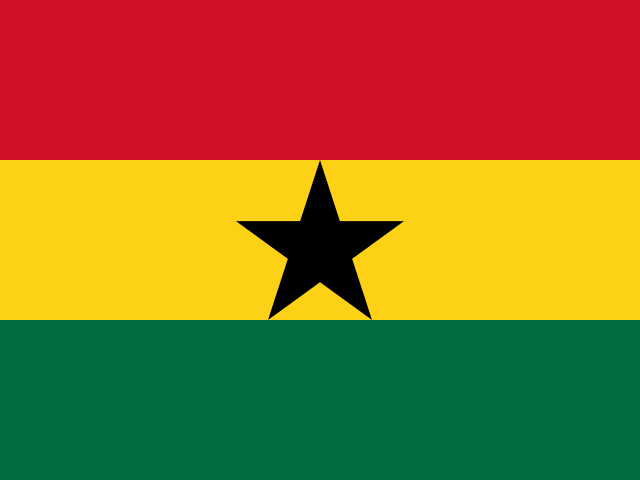
Ghana’s Yorùbá story has many strands: Ga traditions of kinship with Ilé-Ifẹ̀, the Afro-Brazilian returnees known as the Tabom, the line of Yorùbá Chiefs of Accra, and generations of Yorùbá traders.
The Ga and Ilé-Ifẹ̀
The Ga people of Accra hold oral traditions that trace their origins eastward to Ilé-Ifẹ̀, and the Ga and Yorùbá royal houses treat each other as kin. The Ooni of Ifẹ̀ visited Ghana in 2016, and in 2022 the newly installed Ga Mantse, King Tackie Teiko Tsuru II, led a delegation to Ilé-Ifẹ̀ to reaffirm the bond. Historians still debate the Ga’s precise origins, but this tradition of shared heritage shaped how Yorùbá newcomers were received in Accra.
The Tabom
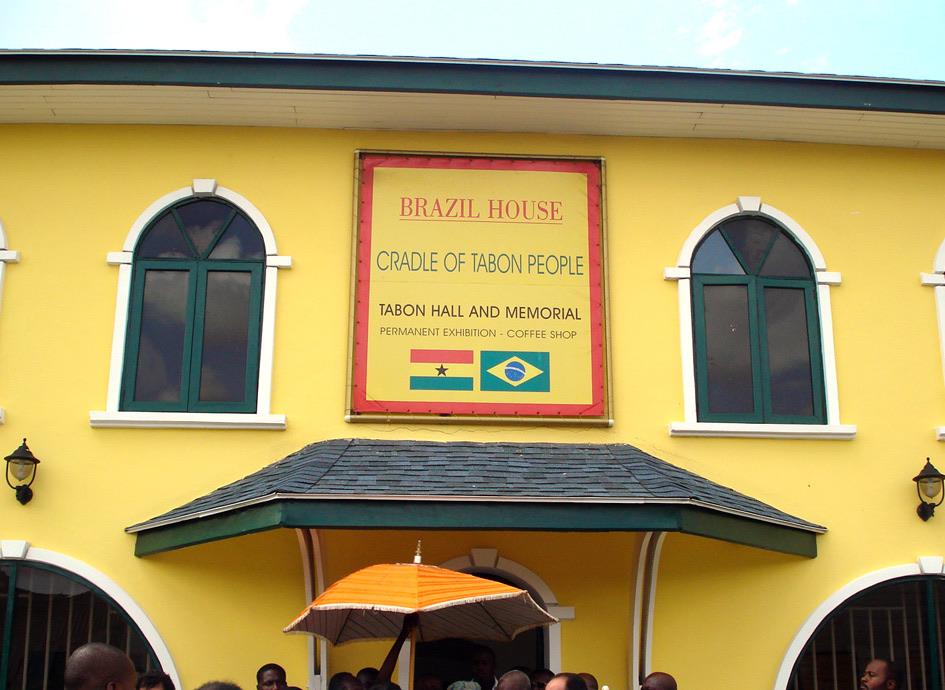
In 1836 a group of Afro-Brazilian returnees, formerly enslaved in Brazil and many of them of Yorùbá and Hausa descent, settled in Accra. Known as the Tabom, from the Portuguese tá bom (“all right”), they made their home in the Otublohum and Jamestown quarters, where Brazil House still stands.
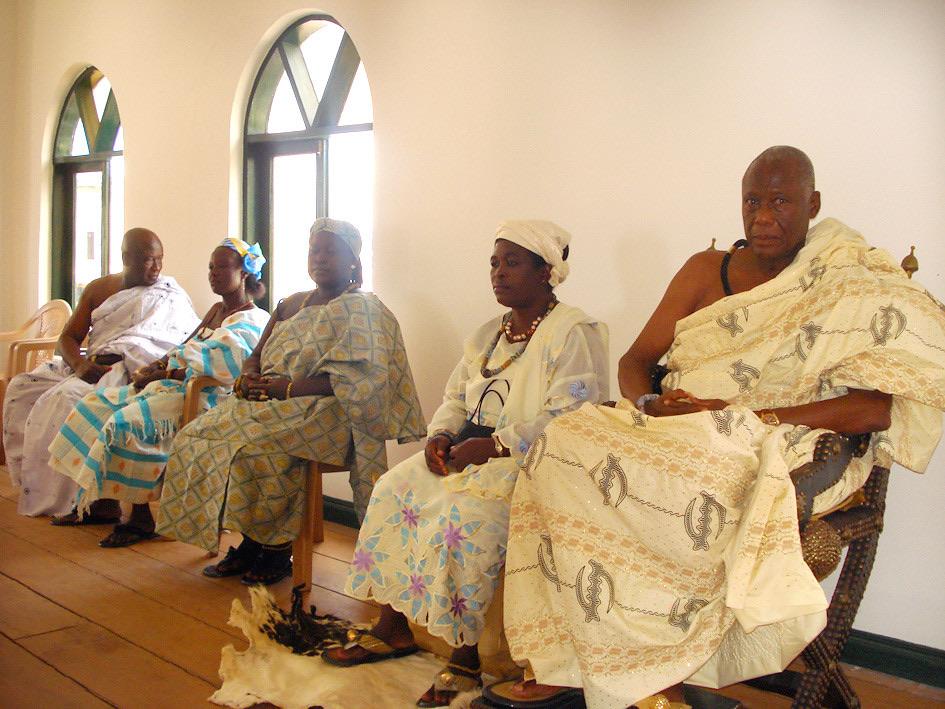

They brought skills such as tailoring: the Morton family ran Accra’s first tailoring shop. Their chief, the Tabom Mantse, comes from the Nelson family.

The Yorùbá Chiefs of Accra
In the late nineteenth century Brimah, a Muslim cattle trader from Ìlọrin, settled near the Jamestown lighthouse and in 1881 obtained land from the Ga Mantse for his family and followers. He married into a Tabom family, founding the Peregrino-Brimah line, and organised Accra’s small Muslim community, made up mainly of migrants from Nigeria.
In the early 1900s King Tackie Tawiah I presented him with a sword of office, and the British recognised him as head of Accra’s Muslim community. Community accounts also credit him with founding an early Zongo settlement and one of Accra’s first mosques. Chief Brimah I died in 1915. His successors, the Yorùbá Chiefs of Accra, are recognised as heads of the Yorùbá community in Ghana, and the sword still hangs in their palace.
Yorùbá Traders
Yorùbá merchants spread through Accra, Kumasi, Sekondi, Tamale and other towns, each community with its own chief, and were prominent among the traders of Accra’s great markets, Makola and Tudu. Yorùbá professionals settled too: the lawyer S. O. Akiwumi moved from Lagos to Accra in the late 1880s, and his son married into a leading Ga family and became a Supreme Court justice and Speaker of the National Assembly.
In 1969 the Busia government’s Aliens Compliance Order forced large numbers of non-Ghanaian Africans, including many Yorùbá, to leave the country, and many families returned to towns such as Ògbómọ̀ṣọ́ and Ọ̀yọ́. In 1983 Nigeria in turn expelled many Ghanaians, an episode remembered as “Ghana Must Go”. Yorùbá communities nonetheless remain across Ghana, many of them now Ghanaian citizens; in 2013 they marked 200 years since their ancestors’ arrival.