
Brazil holds the deepest Yorùbá heritage in the Americas. In Bahia, and above all in Salvador, where the Yorùbá were known as Nagô, Yorùbá words, faith, food and music are part of daily life.
History
Brazil received more enslaved Africans than any other country, and in the final decades of its slave trade, which ended in 1850, a large share of those landed in Bahia came from Yorùbá-speaking lands. In Salvador they were known as Nagô.
In January 1835 enslaved and freed Africans, mainly Muslim Nagô and Hausa, led the Malê Revolt in Salvador. It was crushed, and many Africans were afterwards deported or chose to return to West Africa. These returnees, the Agudás, settled in Lagos, Porto-Novo and Ouidah, where they built the Brazilian Quarter of Lagos Island; a related group, the Tabom, settled in Accra.
Religious Heritage
Candomblé of the Ketu (Nagô) nation is the main Yorùbá-derived religion in Brazil. It honours the orixás, among them Xangô, Iemanjá, Ogum and Oxum, in a Yorùbá liturgical language. Its founding temples in Salvador include Casa Branca (Ilê Axé Iyá Nassô Oká), Gantois and Ilê Axé Opô Afonjá.
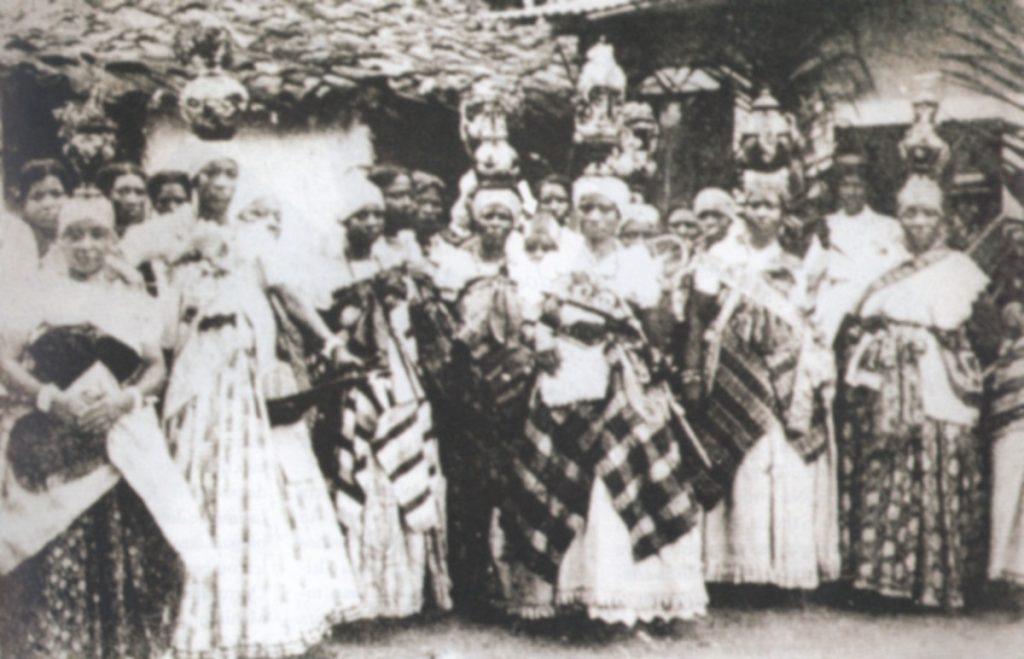

On Itaparica Island, devotees maintain the Egungun ancestor cult, a direct survival of Yorùbá ancestor worship.

Ancestral Heritage
The Nagô name itself; Yorùbá words in Bahian speech and ritual; foods such as acarajé, from the Yorùbá àkàrà; carnival groups such as the afoxé Filhos de Gandhy; and the two-way link with the Brazilian Quarter of Lagos all trace Bahia’s descent from the Yorùbá.