
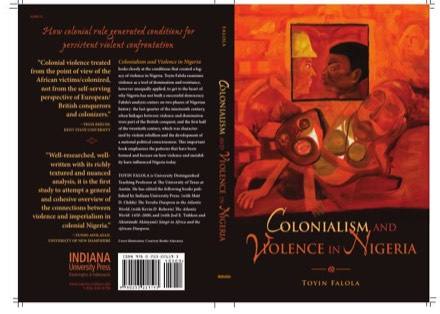
About this book
With most of my books, the idea to write the next one emerges in the process of writing the previous one. When I was completing a book on religious violence in Nigeria, two obvious gaps occurred to me—the linkage between colonialism and violence and that between ethnicity and violence. The idea of writing about both remained at the back of my mind for some years. As I came close to finishing another book on Nigeria, Modernization and Economic Reforms, I decided to return again to Nigeria’s colonial past. This was good timing, in part because since the U.S.-led attack on Iraq and the unfolding consequences of that attack there has been greater interest in the study of empires. Scholars and amateur commentators on empires began to popularize the ideas of nationalism and resistance, which is always called insurgency in the Western media. Ideologies of domination and of revolt and resistance have attained a kind of epidemic attention, even if they are badly framed in the duality of what is called good and evil—domination becomes the “good,” while the forces resisting external control are castigated as “evil.” History begins to repeat itself, taking us back to the example of the era of British colonialism in Nigeria, when colonial violence was presented as “good” and anticolonial violence was presented as “evil.” This duality is misleading and undermines analysis of the motives and outcomes of violence